



The 2019 revision of BS 7883 hasn’t just updated best practice for fall protection systems – it has fundamentally changed how safety is evidenced on site.
At the centre of the change is one critical concept: if you can’t see it, you must be able to prove it. And where you can’t prove it, you must expose it.
The heart of the change: Hidden fixings and evidence
The most significant shift in BS 7883:2019 is the focus on hidden fixings and the level of documentation required to support them. The examples below show why this matters in practice.
Where a system’s structural components sit beneath the roof covering – whether through-fixings, resin anchors or concealed brackets – the standard now requires a detailed technical file to demonstrate that the system is safe.
This goes far beyond basic product data. The expectation is a clear, traceable evidence pack including:
- design calculations showing required loads and safety factors
- substrate suitability and type testing evidence
- fixing specifications and installation methods
- material certification
- installation records, including photos and, ideally, delivery notes to verify what was actually used
If that documentation exists and is robust, the system can be assessed against it.
If it doesn’t, the standard is clear: you cannot assume compliance.
Instead, a defined proportion of fixings must be physically exposed to understand what has been installed. From there, a technical file must be rebuilt based on real findings – sometimes involving further investigation, testing or research into components.
Compliance is no longer based on visibility or assumption. It is based on verified evidence.
What this looks like in practice
BS 7883:2019 has increased awareness of a simple but critical truth:
Just because a post looks secure at roof level, it does not mean it is safe to use.
At Omega Red Group, investigation works carried out in line with the revised standard are uncovering issues that would previously have gone undetected.
Hidden corrosion and material failures
When opening up roof membranes to inspect concealed fixings, we are regularly finding:
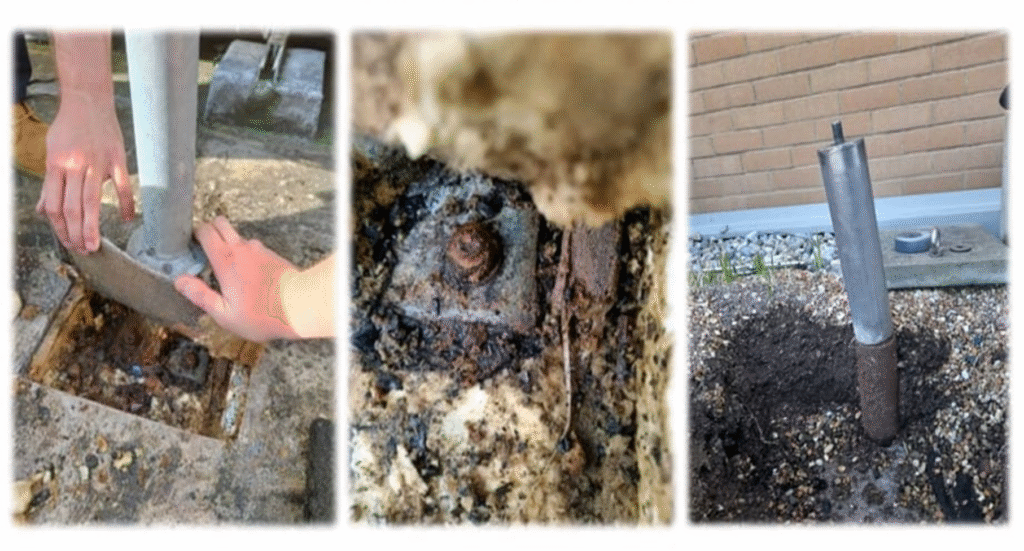
- corrosion of posts and fixings beneath the waterproofing layer
- mixed or inappropriate materials, such as galvanised elements used in hidden locations
- no evidence that the system was ever designed to withstand required loads
These are not visible during a standard visual inspection. Without intrusive checks or detailed documentation, they remain a hidden risk.
The 2019 revision forces that risk into the open. It also reinforces best practice going forward – for example, ensuring entirely stainless-steel components are used in concealed areas and providing a full audit trail to prove it.
When systems look safe but aren't
One of the most concerning outcomes of enhanced inspection requirements is the number of systems that appear safe but fail under scrutiny.
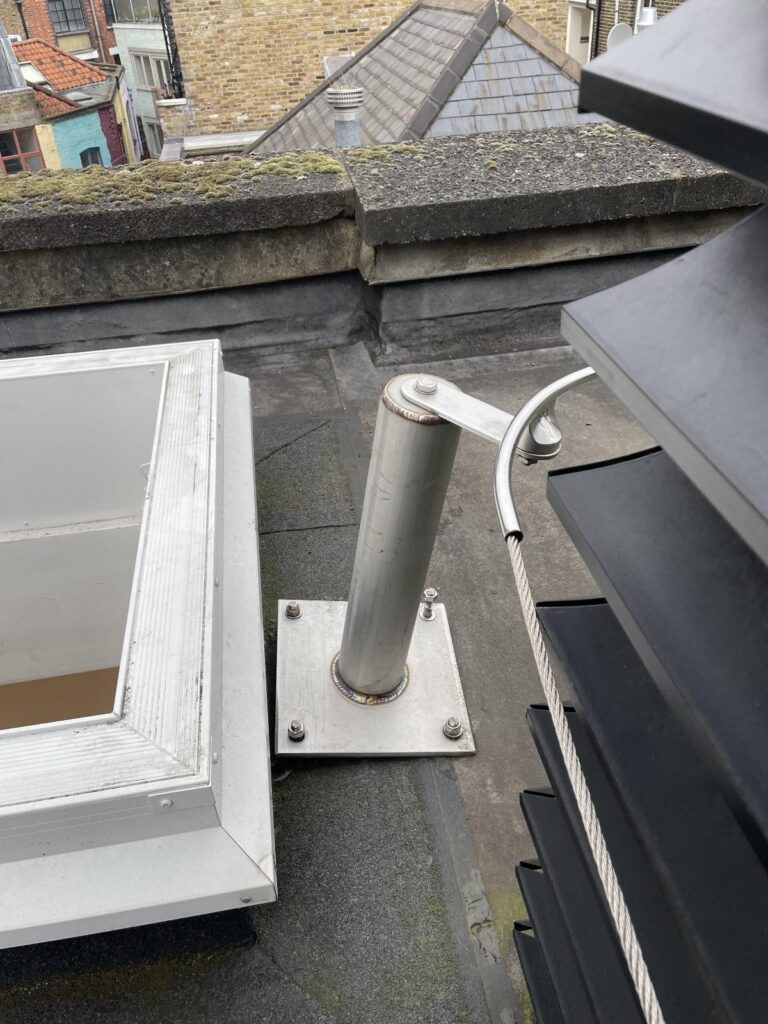
In multiple cases, we have found posts installed in high-risk areas, adjacent to skylights or parapets, that:
- were not fixed into the structure correctly
- used underspecified or inappropriate fixings
- would likely fail completely under fall arrest loading
In one instance, a post that appeared secure at surface level was found, once investigated, to have no suitable structural fixing at all. In a fall event, it would have simply pulled out of the roof.
These are not minor defects. They are catastrophic failure points.
Installation errors now being exposed
The increased emphasis on evidence and verification is also highlighting poor installation practices.
Examples uncovered during investigation works, some of which would not have been identified prior to the 2019 revision, include:
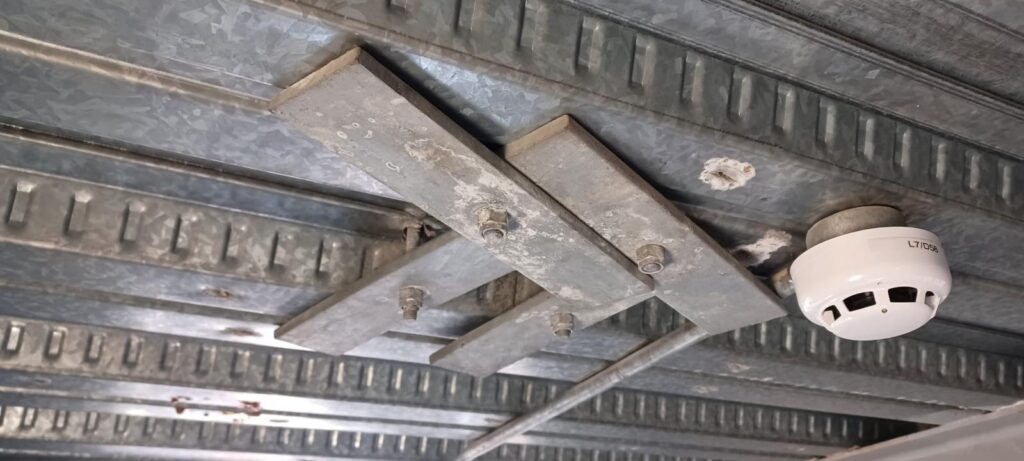
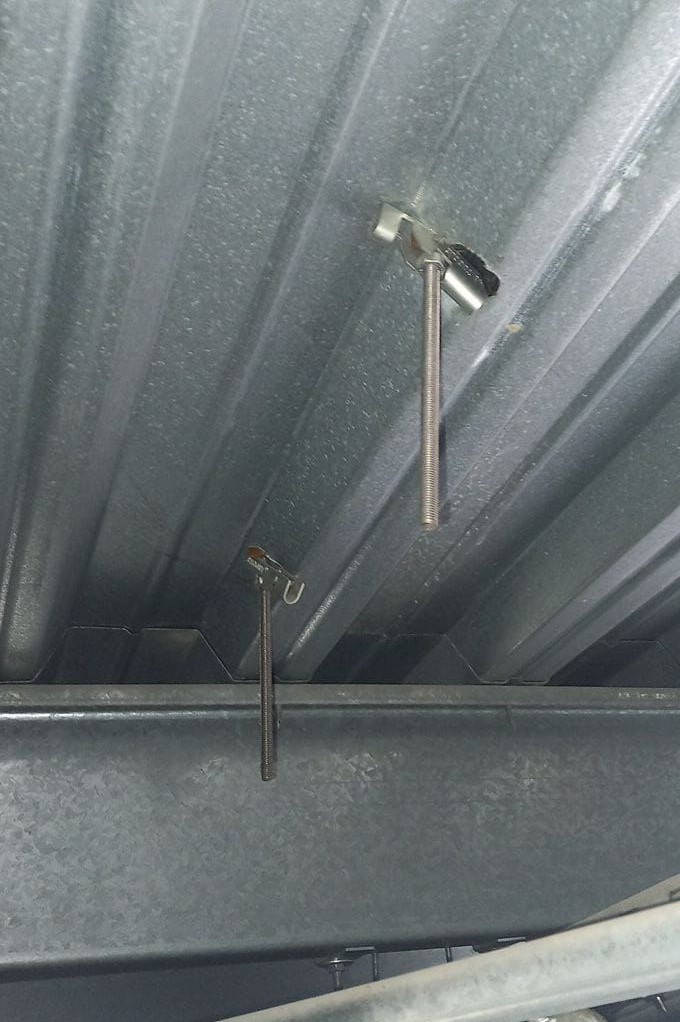
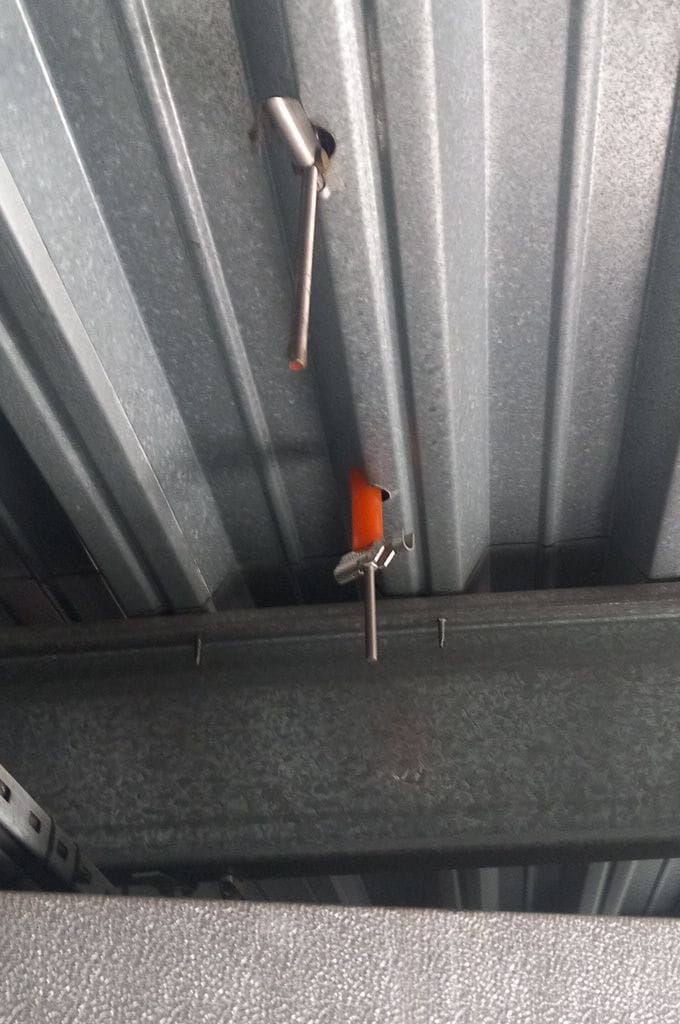
- toggle fixings incorrectly deployed and not engaged with the roof sheet
- sleeves cut to the wrong length, preventing correct load transfer
- fixings bearing onto components instead of the structure itself
- loose or inadequately secured anchors beneath membranes
In some cases, these systems may have previously passed basic pull testing. But once exposed, the reality is clear – the margin of safety is questionable at best.
The revised standard demands more than a test result. It demands confidence in the full system.
Eyebolts: A simple example of the principle
Removable eyebolts provide a good example of how BS 7883 reinforces verification.
These systems rely on a socket installed into the structure, often masonry. To confirm safety, you need evidence that:
- the substrate has been tested and can achieve the required load (typically 6kN)
- the fixing design meets the relevant factor of safety (×2 for fall arrest, ×2.5 for rope access)
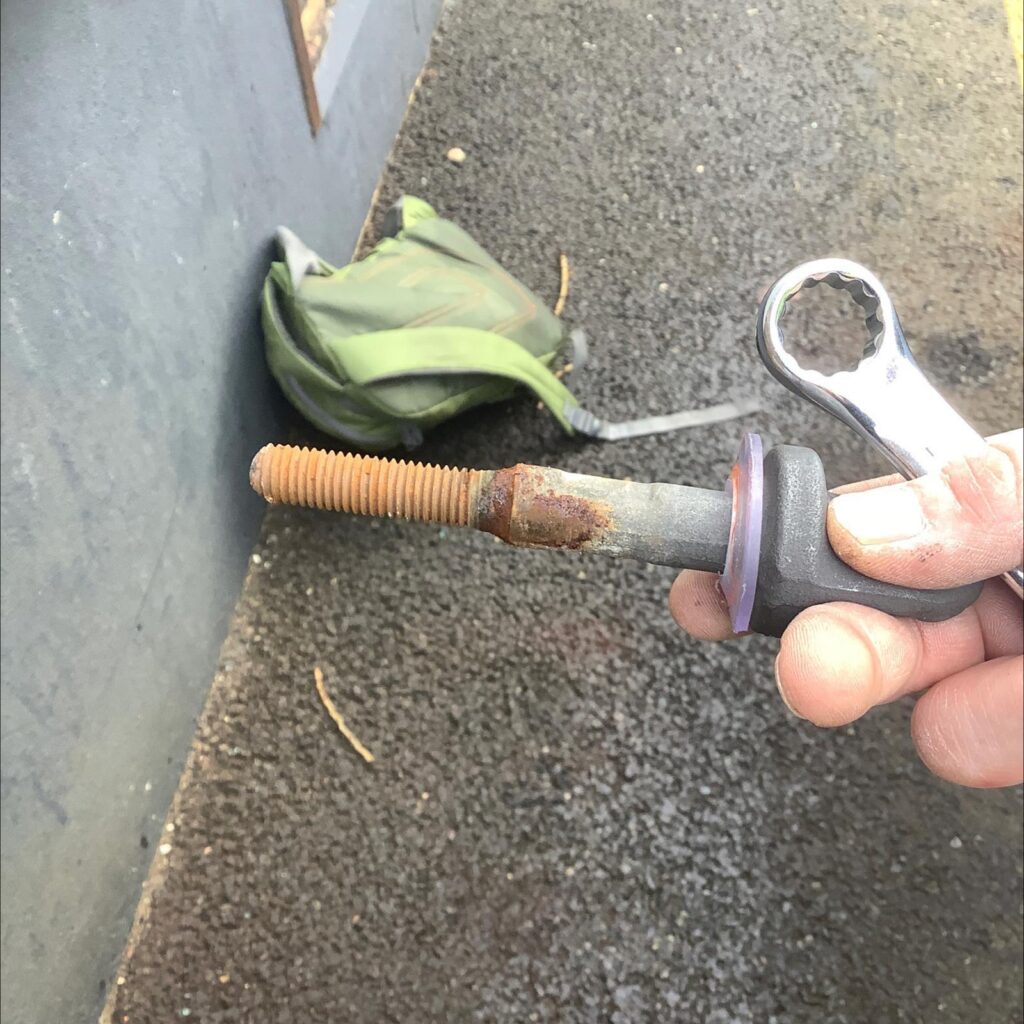
Crucially, inspection requires the eyebolt to be removed. This is the only way to check the condition of the socket and threads, and to identify hidden corrosion or damage.
Visible rust on the eyebolt alone raises serious concerns – particularly where non-stainless materials have been used externally.
The presence of a round disc inspection tag fitted directly around the eyebolt provides evidence that this process has been completed.
Again, the principle is the same: don’t take it at face value. Prove it.
Building a technical file from reality
Where documentation is missing, the process of exposing fixings and investigating components allows a technical file to be built retrospectively.
This often involves:
- identifying fixings and materials on site
- cross-referencing with manufacturer data
- carrying out load testing where appropriate
- assessing whether the system, as installed, can meet required performance
In many cases, the conclusion is that remediation or replacement is required.
While this can introduce additional cost, it removes uncertainty and with it, risk.
A safer approach going forward
One of the key lessons from BS 7883:2019 is that hidden systems introduce ongoing challenges.
Where possible, Omega Red Group prioritises collective protection or systems that:
- do not rely on concealed fixings
- can be visually inspected without intrusive works
- can be decommissioned or maintained without breaking the roof covering
This reduces future inspection complexity, lowers lifecycle costs and, most importantly, improves safety assurance.
The bottom line: Evidence over assumption
BS 7883:2019 is making sites safer because it removes the ability to rely on trust alone.
It asks simple but critical questions:
- Where is the evidence that this system will perform?
- If we can’t evidence it, have we verified it?
At Omega Red Group, the answer increasingly comes from real investigation work – and the findings are clear.
Without these changes, many dangerous systems would still be in service today, appearing compliant but fundamentally unsafe.
The 2019 revision doesn’t just raise the bar. It ensures that safety systems are exactly that – systems you can rely on when it matters most.