

Key facts
- Client: LCP UK, part of M Core
- Location: M Weaver’s Wharf Retail Park, Kidderminster
- Buildings Covered: 6
- Relationship duration: Over 10 years
- Services provided: Lightning protection inspection, testing and maintenance
- Standards referenced: BS EN 62305 and BS 6651
- Additional coverage: Omega Red Group now maintains lightning protection systems at 11 LCP UK sites nationwide.
Long-term lightning protection maintenance partnership
For more than ten years, Omega Red Group has been responsible for the inspection, testing, and maintenance of the lightning protection systems protecting the six buildings at M Weaver’s Wharf Retail Park in Kidderminster. For the last three years, these services have been delivered on behalf of LCP UK, part of M Core.
LCP UK, part of M Core, initially retained Omega Red Group as the incumbent contractor. However, through the consistent delivery of reliable service, technical expertise and responsive support, the relationship has grown significantly. As a result, Omega Red Group now provides lightning protection services across a total of eleven sites.
Our inspection process
Every visit begins with a site-specific Point of Work risk assessment. Before commencing any work, our engineers carry out a survey of the surrounding area to identify any additional hazards that may not already be covered within the project risk assessments and method statements (RAMS).
Once they have signed in with site management and completed site inductions, our engineers undertake a comprehensive visual inspection of each accessible roof area. Where safe access is available, the lightning protection system is inspected for:
- Loose or damaged fixings
- Unbonded plant or equipment
- Damaged conductors and connections
- General condition and compliance issues
Any defects identified during the inspection are documented and recommendations for remedial works are provided.
Testing the earthing system
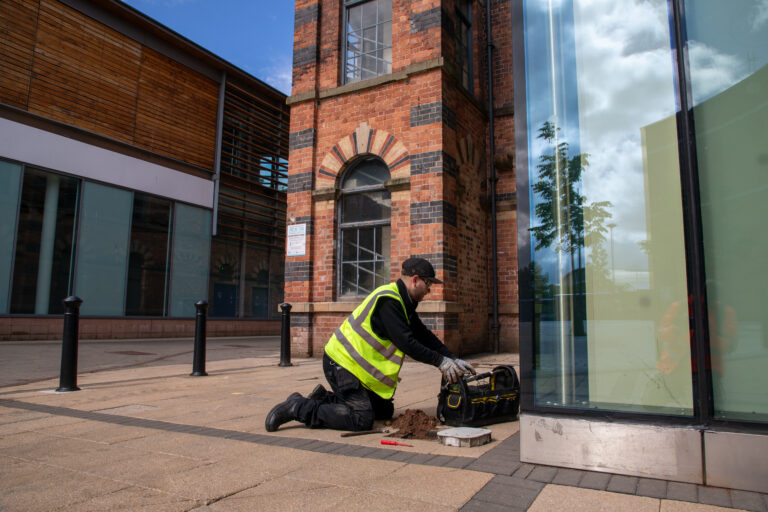
The majority of the lightning protection systems throughout M Weaver’s Wharf utilise the internal steel structure of the buildings as natural down conductors. Consequently, much of the routine testing is carried out at ground level within dedicated lightning protection earth pits.
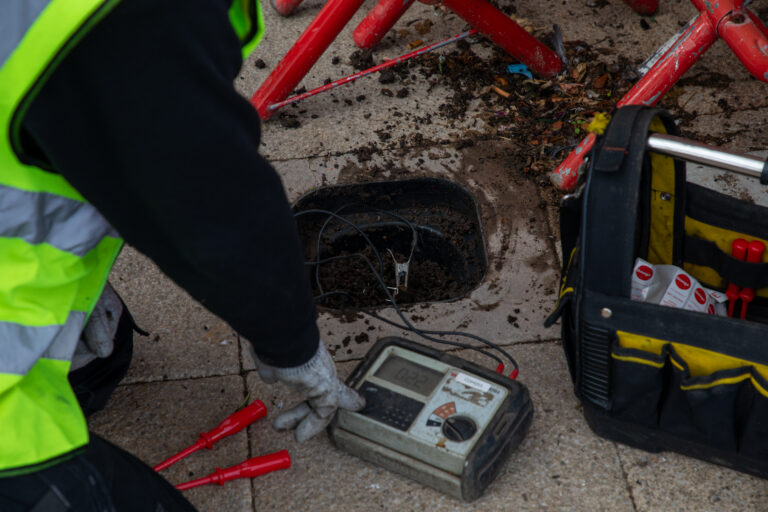
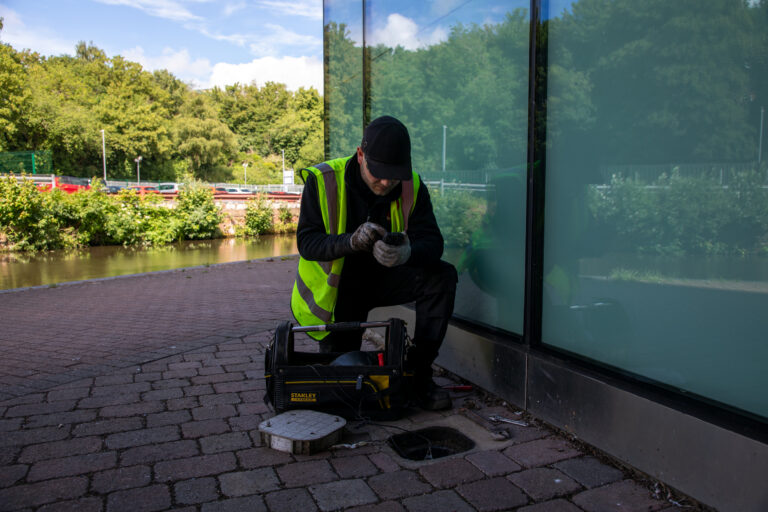
Over time, earth pits can become contaminated with water, soil, debris and general buildup. Before testing can begin, our engineers frequently need to clear the pits to gain access to the disconnecting links and associated test points.
Once access is established, earth resistance measurements are taken to verify that each earth termination remains capable of safely dissipating lightning strike currents into the ground. Maintaining acceptable earth resistance values is essential to ensuring the continued effectiveness of the lightning protection system.
Managing safety on a busy retail site
As an occupied retail environment, M Weaver’s Wharf presents several operational challenges that must be carefully managed during inspections.
Key considerations include:
- High levels of pedestrian traffic
- Members of the public moving throughout the site
- Vehicle movements within car parks and service areas
- Proximity to the canal bordering parts of the development
All engineers wear appropriate PPE, including high-visibility clothing, and additional safety measures such as barriers are deployed whenever necessary. On the day of this inspection, two additional team members were present, allowing the work to be completed safely without the need for additional segregation barriers.
Heritage structure protection
The site also includes a prominent heritage chimney structure fitted with visible lightning protection tape. Due to the nature and condition of the structure, Omega Red Group’s activities are limited to visual inspections of the system and low-level earth resistance testing. This approach allows the integrity of the heritage asset to be maintained while ensuring the lightning protection system remains in serviceable condition.
Internal protection measures
Where applicable and where access is available, internal lightning protection measures may also be reviewed as part of the inspection process. This can include a visual assessment of surge protection devices (SPDs) and equipotential bonding arrangements.
Engineers assess the general condition of accessible equipment and connections. They check visual status indicators of SPDs and look for signs of damage, insecure connections or other issues that may affect system performance.
Recommendations or potential areas for improvement identified during the inspection are recorded within the inspection report.
Compliance and standards
During every inspection, Omega Red Group assesses the condition of the system against the requirements of current British Standards, principally BS EN 62305, and where applicable, its predecessor standard BS 6651.
Where aspects of an installation do not meet the requirements of current standards, these observations are identified within the inspection certificate and accompanying reports.
However, under the Health and Safety at Work etc. Act (HASAWA) and the Electricity at Work Regulations (EWR), there is generally no automatic requirement to upgrade an existing lightning protection system solely to meet the latest edition of a standard, provided the system is maintained in a safe and serviceable condition. Clients should always consult with their insurers, as insurance providers may impose additional requirements relating to lightning protection compliance and risk management.
Delivering long-term asset protection
Our ongoing work at M Weaver’s Wharf demonstrates Omega Red Group’s commitment to providing practical, compliant and cost-effective lightning protection services. Through regular inspections, thorough testing, proactive reporting and a strong focus on safety, we continue to help LCP UK, part of M Core, protect both their buildings and the people who use them every day.