
Exposing lightning safety myths: Lightning never strikes the same place twice

We’ve all heard the expression, ‘lightning never strikes the same place twice’, but what’s the truth behind this phrase? In this article, we’ll be turning to science to set the record straight. 

Before meteorology revealed weather patterns, lightning appeared to be an unpredictable force, striking locations randomly, with little chance of striking the same place twice. Over time, this observation turned into folklore and the phrase gained metaphorical use for when something rare happens, suggesting it won’t happen again. But in terms of actual physics, lightning shows no hesitation in returning to the same spot. 

Let’s explore why.

Lightning is a huge spark of electrical discharge between clouds and the ground. It seeks the most direct route to the ground, targeting tall, conductive, or isolated structures such as towers or skyscrapers.  

Once a structure proves to be a good conductor, lightning often strikes multiple times. That’s why proper lightning protection is critical. A resilient system ensures that when lightning does strike, whether once or repeatedly, the electrical discharge is diverted to ground, keeping the building and its occupants safe.  

These iconic UK landmarks often attract lightning, but robust protection systems shield them from harm. 

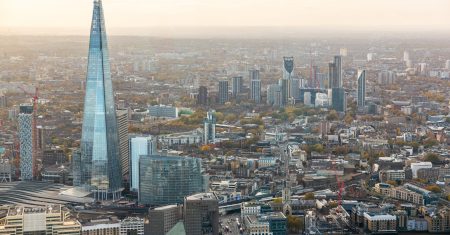
The Shard, London

Standing at 309.6m with 95 storeys, The Shard is the tallest building in the United Kingdom and a frequent target for lightning during storms. Designed as a space for living, working, and leisure, it contains over 320 kilometres of electrical wiring. To ensure uninterrupted operations and safety, the building is equipped with a robust lightning protection system that mitigates the impact of strikes.

Aerial view of the london skyline, highlighting skyscrapers, surrounding buildings, the river Thames, and a cloudy sky
st-pauls-church-with-dome-and-warm-sunlight-2025-10-06-12-35-57-utc
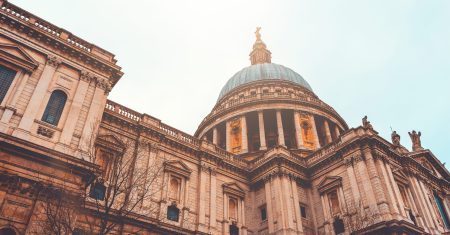
St Paul's Cathedral, London

At 111m, St Paul’s Cathedral’s iconic dome is recognised as the second largest of its kind in the worldThe cathedral has a notable history of lightning strikes. In 1561, a strike ignited its spire causing significant damage and interpreted at the time as a dramatic omen. Today, lightning protection systems ensure the cathedral remains resilient against nature’s powerful force.

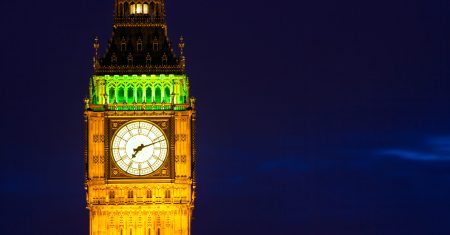
Elizabeth Tower (Big Ben), London

Thanks to its height and prominence on the Westminster skyline, Big Ben is a natural target for lightning. Historical records show that the 96m structure has been hit multiple times since its construction in 1859, with early incidents occasionally disrupting the clock’s mechanism. Today, modern lightning protection channels strikes safely away from the tower, maintaining its resilience and keeping its worldfamous clock ticking.

Night view of Big Ben in London, UK
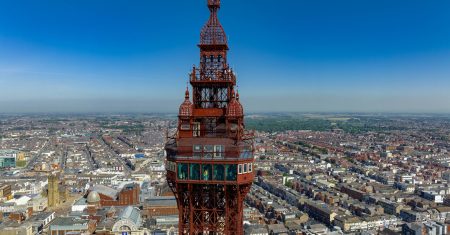
A drone view of the Blackpool Tower in Blackpool, England in the daylight
Blackpool Tower

At 158m tall, Blackpool Tower has long been a striking feature of the Lancashire coastline, and a natural target for lightning. In 1933, a storm saw lightning encircle the tower’s crow’s nest before racing down its iron pillars and into its lift shaft. Aside from a brief power outage, neither the structure nor its occupants were harmed. Thanks to its robust steel framework and integrated conductor systems, the tower safely disperses electrical charges, ensuring the protection of visitors and uninterrupted operations. Today, it remains one of the UK’s most iconic seaside landmarks.

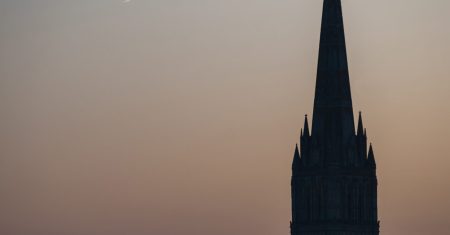
Salisbury Cathedral Spire

At 123m, Salisbury Cathedral’s spire is the tallest in England, and the second tallest of its kind in Europe, making it a natural target for lightning. Historical strikes in 1431, 1641, and 1741 caused damage, yet the spire still stands thanks to restoration and modern protection systems. Today, lightning protection safeguards the cathedral, ensuring this historic treasure continues to thrive.

Salisbury Cathedral with the moon at night, Wiltshire, England, United Kingdom, Europe

We’re proud to design, supply, install and maintain systems that keep buildings safe from nature’s most powerful force. Whether you operate tall structures, critical infrastructure or anything in between, don’t leave safety to chance.   

Latest news

Lightning protection

Lightning | Are you truly protected?

After more than ten years, the British Standard (BS) for protection against the effects of lightning, BS EN 62305, has undergone a technical revision, becoming BS EN IEC 62305, which acknowledges the international standard upon which it is based.

Read more