
Exposing lightning safety myths: ‘I don’t need to worry about surge protection.’

When people think about lightning protection, they often picture air rods and conductors on the roof. Surge protection rarely gets the same attention. 

That’s a dangerous mistake. 

To be clear from the start: surge protection is critically important. It doesn’t just protect equipment; it also helps protect people. Electrical surges caused by lightning can lead to electrocution, dangerous sparking and fire. 

At the same time, surge protection is only one part of a properly designed lightning protection system. When it’s correctly specified and installed as part of a complete solution, it plays a vital role in preventing electric shock, fire and damage to critical systems. 

The myth: 'Surge protection isn't important'

Surge Protection Devices (SPDs) have been formally recognised as a key part of lightning protection systems in the UK for many years. And yet, we still regularly encounter beliefs like: 

  • ‘It wasn’t needed years ago, so we don’t need it now.’ 
  • ‘Our electrical installation already covers that.’ 
  • ‘We have surge protection on the main incomer, so we’re protected.’


The problem is that partial protection often creates a false sense of security. 

The reality: Without surge protection, you're exposed

In simple terms, if surge protection isn’t properly designed into your system, there is nothing to stop massive electrical energy from a lightning strike entering your building. 

That energy can: 

  • destroy critical equipment 
  • cause dangerous sparking and fire 
  • create serious electric shock risks 
  • shut down operations for days, weeks or even longer 


And it’s not as simple as installing ‘a’ surge protector. Different types of SPDs have different jobs, and they work together as a coordinated system. 

What actually is surge protection?

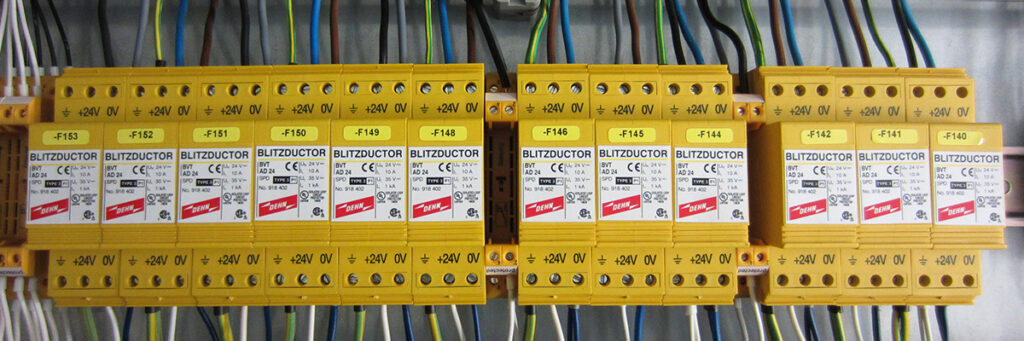
An SPD is an electrical component designed to protect systems from sudden, harmful voltage spikes (called transient overvoltage), caused by lightning, grid disturbances or electrical switching. 

In simple terms, SPDs: 

  • detect dangerous voltage spikes 
  • divert excess energy safely to earth 
  • limit the voltage that reaches your equipment 
 
surge-protection-omega

Types of surge protection

  • Type 1 SPD (waveform 10/350 μs): Protects against very high-energy surges, such as lightning strikes to overhead lines or to the lightning protection system itself. 
  • Type 2 SPD (waveform 8/20 µs): Protects downstream systems from remaining surges that pass through the type 1 device. 
  • Type 3 SPD (waveform 8/20 µs):  Used close to sensitive or critical equipment – for example servers, control systems or life-support equipment in hospitals.

Effective protection usually means protecting at multiple levels: from the main incomer to distribution boards, right through to critical end equipment. 

What actually protects a building?

Real protection comes from a joined-up approach: 

  • A lightning protection risk assessment carried out by a competent specialist 
  • properly designed system, combining physical lightning protection and surge protection 
  • Regular testing and inspection so faults are found before they become failures – we typically recommend every 11 months. 

Why this matters for building owners and operators

In recent years, we have seen cases where: 

  • Hospitals have had to cancel procedures after storms due to damaged critical equipment 
  • Business sites have seen multiple tenants affected by a single surge event 
  • Transport and infrastructure facilities have suffered major disruption due to lightning-related electrical damage 

In each case, the cost was far greater than just the repair. Downtime, disruption, safety risks and reputational impact quickly add up. 

It is also worth asking: 

  • Are you clear on what you are trying to protect? 
  • Are your SPDs correctly specified and installed by people who understand lightning protection, not just to BS 7671 wiring regulation? 
  • Do you know how to check whether your SPDs are still working? 

The bottom line

We’ve worked with many organisations after they’ve suffered lightning-related damage. 

We’d much rather work with you before that happens. 

If you’re not sure whether your surge protection, or your overall lightning protection, is really doing what you think it is, speak to our specialist team who will review your system comprehensively. 

Lightning is unavoidable. The worst consequences don’t have to be. 

A square image with the logo for 'Grounded in Safety' podcast in the centre

If you enjoyed this article, why not plug into our podcast ‘Grounded in Safety’?  

Our latest episode ‘The safety foundation’ explores power earthing and what it means to have a compliant and comprehensive electrical safety system. We unpack why earthing matters, reveal the hidden hazards that often go unnoticed and break down the key components that make an earthing system truly effective. 


Listen on Spotify  | Listen on Apple Podcasts  | Watch on YouTube 

Don’t forget to subscribe to be one of the first to hear about new episodes. 

Read other articles in our 'Myth busters' series

Latest news