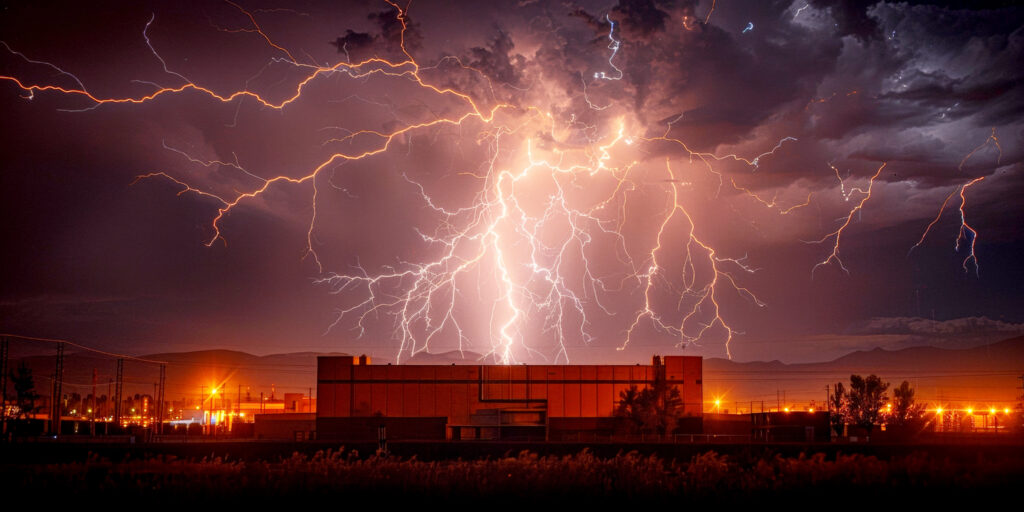
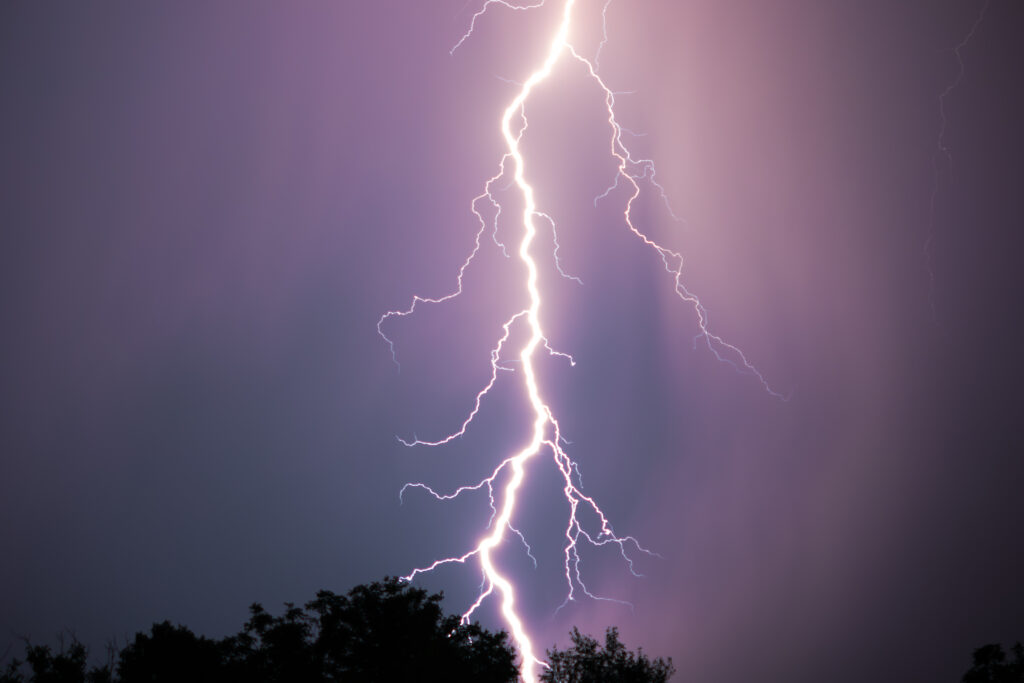

Lightning is often seen as a low-probability event – something that happens ‘elsewhere’ or too infrequently to justify action. But strikes occur more often than many organisations realise and they don’t just threaten tall or isolated structures. From data centres, hospitals and warehouses to schools, retail sites and offices, any building can be exposed.
When lightning does strike, the consequences extend well beyond the dramatic image of a direct hit.
What damage can lightning cause?
There are several risks, all of which can impact safety and business continuity:
- Fire and structural damage
A direct strike can generate extreme heat, leading to fires, cracked masonry, damaged roofing and compromised structural integrity.
- Risk to people
Injuries can occur through direct strikes or indirectly via fire or electric shock from conductive building elements or systems.
- Electrical and electronic failure
Even nearby strikes can induce powerful transient overvoltages, damaging critical systems such as fire alarms, security, IT infrastructure, building management system controls and production equipment.
- Operational downtime
Loss of systems can halt operations, disrupt supply chains and impact service delivery, often long after the storm has passed.
For many organisations, it’s this last point that carries the greatest measurable cost. Downtime, data loss and system recovery can far outweigh the visible physical damage.
Not just 'high-risk' buildings
A common misconception is that lightning primarily affects tall or prominent buildings. While height and location do influence risk, lightning can and does strike:
- low-rise commercial and industrial units
- warehousing and logistics facilities
- schools, healthcare buildings and public sector estates
- electrical infrastructure and network assets
- buildings in dense urban environments as well as rural areas
If a building contains electrical systems, people or business-critical operations, lightning poses a risk.
Risk vs. cost
Whether lightning protection is needed, or advisable, is determined through risk assessment and cost-benefit analysis.
This process considers the:
- strike likelihood based on location and structure
- potential consequences (safety, financial, operational)
- value of assets and continuity of service
- relative cost of protection against cost of potential loss
In some cases, protection measures are mandated by an authority having jurisdiction. In others, the decision comes down to resilience and peace of mind, particularly for organisations where downtime is not an option.
The role of modern standards
The BS EN IEC 62305 series is the benchmark for lightning protection design, risk assessment and system installation and maintenance. The update issued in 2025 reinforces its role in helping organisations to:
- take a structured, evidence-based approach to risk
- address both physical damage and electrical disruption
- align protection measures with modern building use and technology reliance
As buildings become more connected and system-dependent, these updates further emphasise the importance of protecting not just structures, but the continuity of operations within them.
A practical approach to protection
Lightning protection isn’t always about installing the most extensive system possible. It’s about installing the right level of protection, based on risk.
This may include:
- external lightning protection systems (air termination, down conductors, earthing)
- surge protection for electrical and data systems
- regular inspection, testing and maintenance
Final thought
Lightning is unpredictable, but the impact of a strike doesn’t have to be. By properly assessing risk and weighing it against the potential cost of damage and downtime, organisations can make informed decisions to protect people, assets and operations.
For many, it’s not just about compliance – it’s about keeping business moving.